

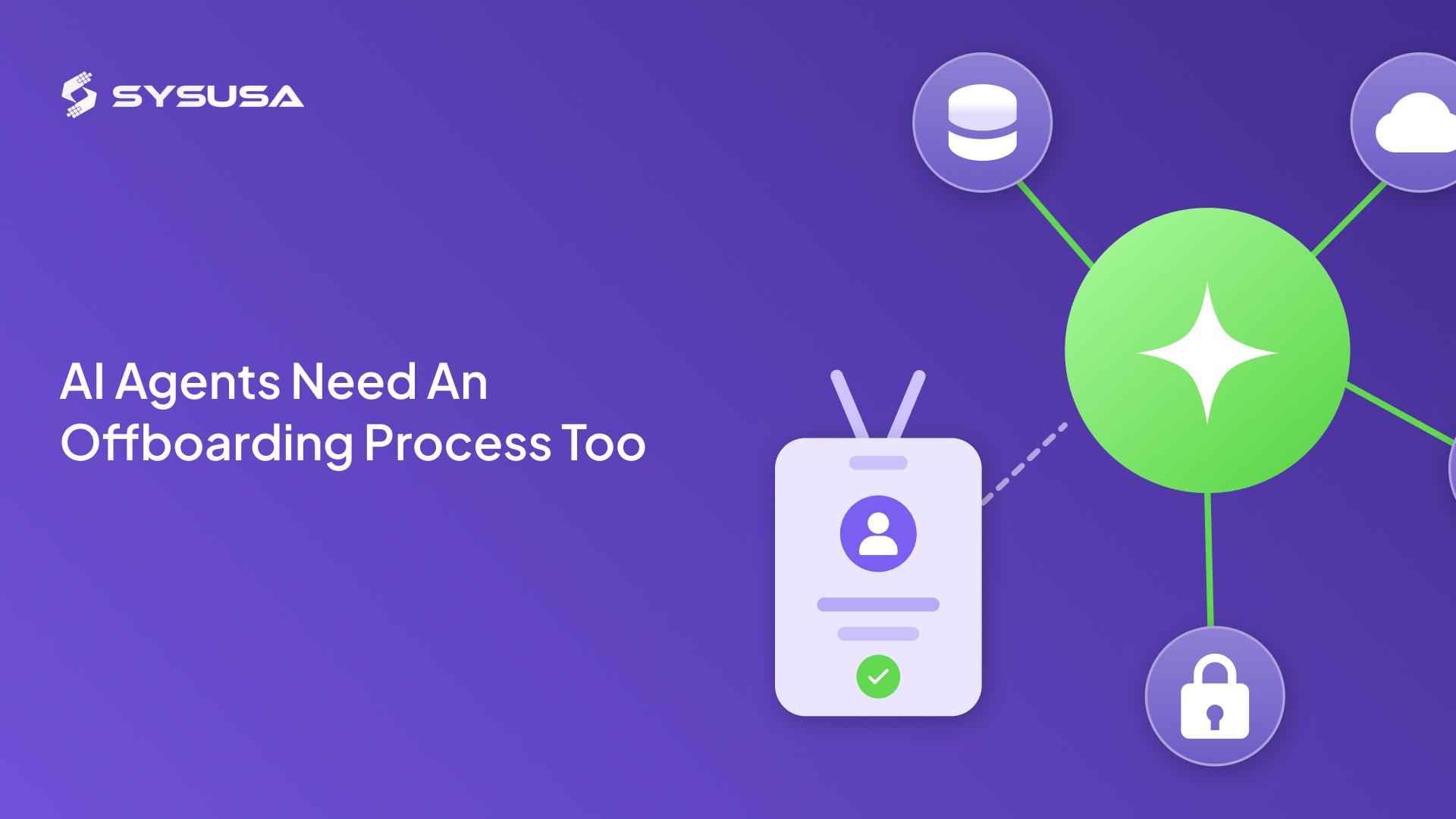

When an employee leaves, a well-run organisation doesn't need anyone to remember to remove their access. HR closes the record, and that one event triggers everything else: accounts are disabled, licences reclaimed, badges deactivated. Offboarding works because the trigger is reliable.
AI agents have no such trigger. An agent gets stood up for a data migration or a pilot. The project ends, the team moves on, and the credentials keep working, because nothing in the environment knows the job is finished. There's no resignation, no last day and no badge to hand in.
That missing trigger explains a large share of what a new study of agentic AI security found. ServiceNow and Phronesis Partners surveyed 3,766 senior security and technology leaders, all VP level or above, across 20 countries and eight industries. Every organisation in the study already runs AI agents in production.
Only 13% have what the study calls a defensible security posture. Yet 56% rate their agentic security as established. Most of the distance between those two numbers comes down to one thing: organisations are governing agents with processes built for people.
The agent count has already outgrown manual tracking
Almost half of organisations (49%) run between 100 and 999 agents, and 35% run more than 1,000. Most respondents (57%) say they keep a full, accurate record of every agent in production. Only 34% register a new agent automatically, through a technical control, at the point it's deployed.
For everyone else, the inventory depends on someone remembering to update it. At a few dozen agents, that's an annoyance. At a thousand, it's a guarantee of gaps, and the study shows it: 29% of security teams found AI agents running in production in the past year that had never been registered.
One US compliance leader in retail described exactly this. Endpoint tools didn't stop staff from deploying their own agents, and there was no policy for auditing agents nobody had approved.
An inventory built after the fact is out of date the day it's finished. The only inventory that holds at scale is one created as a side effect of deployment, where an agent can't go live without being registered, with an owner and a stated purpose.
A map of access is not the same as knowing what an agent can reach
The sharpest finding in the study sits in two numbers. Three quarters of leaders (76%) say they maintain a complete, current map of every agent's access. Only 19% say they can see more than 90% of their agents in real time.
Those two claims can't both describe reality. The first describes what's written down; the second describes what's running. The gap between them is where an attacker will start looking.
Part of the problem predates AI. Identity tools are good at recording which role was assigned to whom. They're much worse at showing what that role amounts to once you follow it through nested groups, an inherited cloud policy and a service account someone wired up years ago.
With people, quarterly access reviews hid that imprecision. With an agent making thousands of API calls a day, it doesn't. You need to know what an agent can reach today, worked out from the live environment, not looked up in a configuration file.
Revocation is where most agent programmes will fail
Deciding to remove an agent's access and the access being gone are two different events. A closed ticket proves that someone agreed to remove a permission. It doesn't prove the permission has disappeared from the system that grants it.
That difference matters most later. When an auditor or regulator asks, eighteen months from now, whether an over-privileged agent was cut off on a specific date, the answer needs to come from the target system, not from the workflow that requested the change. Few organisations can produce that today. Only 39% say their governance framework explicitly covers documentation and audit trails for agent activity.
Spotting a problem is not the same as stopping it
Incidents are already routine: 90% of organisations had an agentic security incident in the past year. Only 36% of those contained it within 24 hours.
Detection is part of the reason. About half of organisations (51%) detect anomalous agent behaviour automatically and in real time. The rest find it through scheduled monitoring or manual review.
Response is the bigger gap. Two thirds (66%) can't act automatically when an agent behaves anomalously. Even when a finding goes to a named owner with a deadline, nothing changes until a person acts, while the agent keeps working at machine speed.
A US security leader in healthcare described a customer support agent that was manipulated through prompt injection into leaking internal project names. Their data loss prevention tools missed it entirely.
The organisations doing better haven't removed people from the decision. They've changed what people decide: instead of approving each action, they set the rules that govern every action. Among organisations with a defensible posture, 55% contain incidents within 24 hours, compared with 33% of everyone else.
Treat every agent like an identity with a lifecycle
None of this needs a new philosophy. It needs the discipline organisations already apply to people and infrastructure, extended to agents.
Give every agent an owner, a purpose and an end date. Record each agent as a configuration item, as the study itself recommends, and link it to the project, change or business service it exists for. When that record closes, the agent's access should close with it, just as an HR record drives employee offboarding.
Register at deployment, not afterwards. Make registration a condition of going live, including for vendor and marketplace agents, which need an owner and a defined scope as much as anything built in-house.
Work out reach from the live environment. Base access decisions on what the agent can reach now, across groups, policies and service accounts, not on the role it was first given.
Verify revocation at the source. Confirm in the target system that removed access is gone, and keep that confirmation as evidence.
Automate the response, govern the rules. Decide in advance what happens when an agent behaves outside its baseline, and let the platform act on it.
Where all of this runs also matters. Among organisations that manage agentic security on a unified platform, 44% have had an agent's exposure or policy violation fixed automatically, compared with 25% of those using separate tools. The study is a survey, so these figures show which practices go together rather than prove cause and effect. But the pattern is consistent: the fewer systems an answer has to be pieced together from, the faster it arrives.
Two questions worth asking this week
Pick any agent running in your environment today and ask two things. What can it reach right now? And the last time you removed some of its access, did that access go?
Organisations that can answer both run the same way at 10,000 agents as at 10. The rest will eventually face those questions anyway, from an auditor, on a deadline, about an agent nobody remembers approving.
SYSUSA works with organisations that run critical services on ServiceNow, in both commercial and federal environments, and agent lifecycle is quickly becoming part of that work. If you're working out how agent ownership, registration and revocation should run in your environment, we're happy to compare notes.
Source: Deployed but Ungoverned: The State of Agentic Security, ServiceNow with Phronesis Partners, 2026. Survey of 3,766 VP-level and above security and technology decision-makers across 20 countries and eight industries.